


 Food Hygiene
 Fire Safety

No products in the basket.
just now

 1495 Enrolled
 3 Hours
 Free & Instant CPD Certificate on CompletionFor Job Seekers, Freshers & ProfessionalsTrusted for Team Training & Businesses
 1033 Enrolled
3 Hours
Free & Instant CPD Certificate on CompletionFor Job Seekers, Freshers & ProfessionalsTrusted for Team Training & Businesses
1183 Enrolled
4 Hours
Free & Instant CPD Certificate on CompletionFor Job Seekers, Freshers & ProfessionalsTrusted for Team Training & Businesses
335 Enrolled
5 Hours
Free & Instant CPD Certificate on CompletionFor Job Seekers, Freshers & ProfessionalsTrusted for Team Training & Businesses





Enter Quantity
or
Get All Course Access – Only £59 (Ends Soon!)
Enter Quantity
| Quantity | Bulk Discount |
|---|---|
 1 -
4 users |
£ 29.00 Save Extra 0% |
| 10
- 19
users |
£ 26.10 Save Extra 10% |
| 20
- 49
users |
£ 21.75 Save Extra 25% |
| 50
- 100
users |
£ 14.50 Save Extra 50% |
| 101
- 500
users |
£ 8.70 Save Extra 70% |
14-Day Money-Back Guarantee
 CALL US!
 EMAIL US!

Access this top-rated course, plus 300+ more - for your team, with a real-time admin dashboard. See Plans & Pricing

97% Satisfied Customers - Majority 5-star

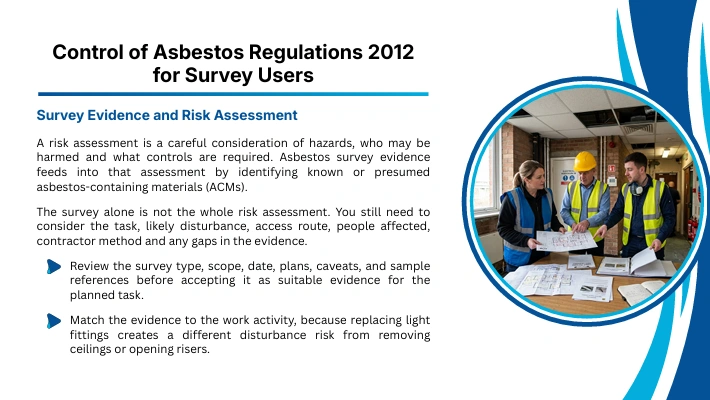
Survey selection, choosing the right survey type for the planned work at hand.
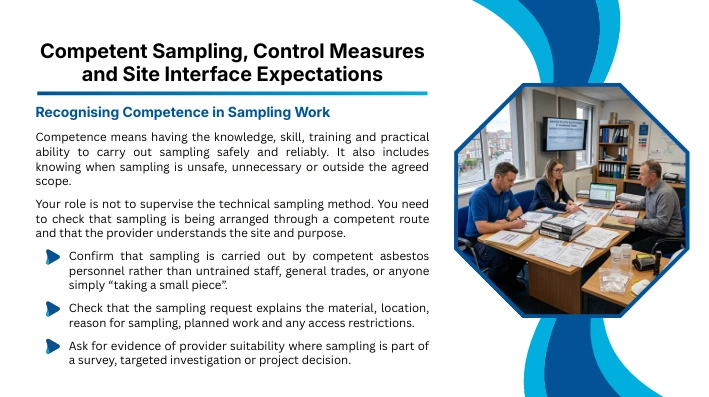
Competence limits, recognising where a survey user's role ends under UK law.
Bulk samples, weighing what a single lab result can and cannot confirm here.
Report review, checking exclusions, assumptions, and areas flagged as unclear.
Register updates, keeping asbestos records fully current after every new finding.
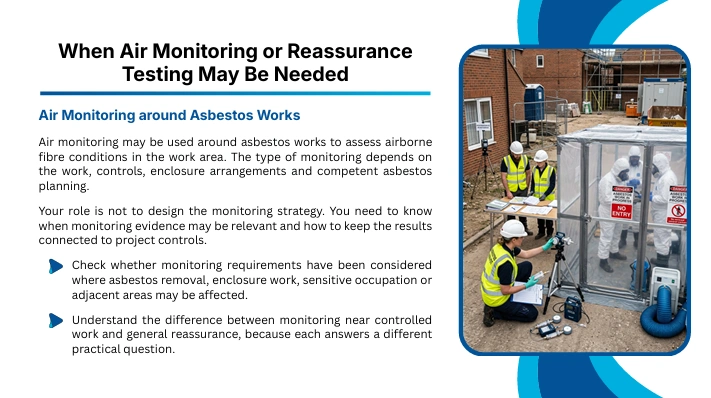
Work planning, feeding survey evidence into site permits, RAMS, and briefings.
 13 Sections
 72 lectures
This Course Includes:

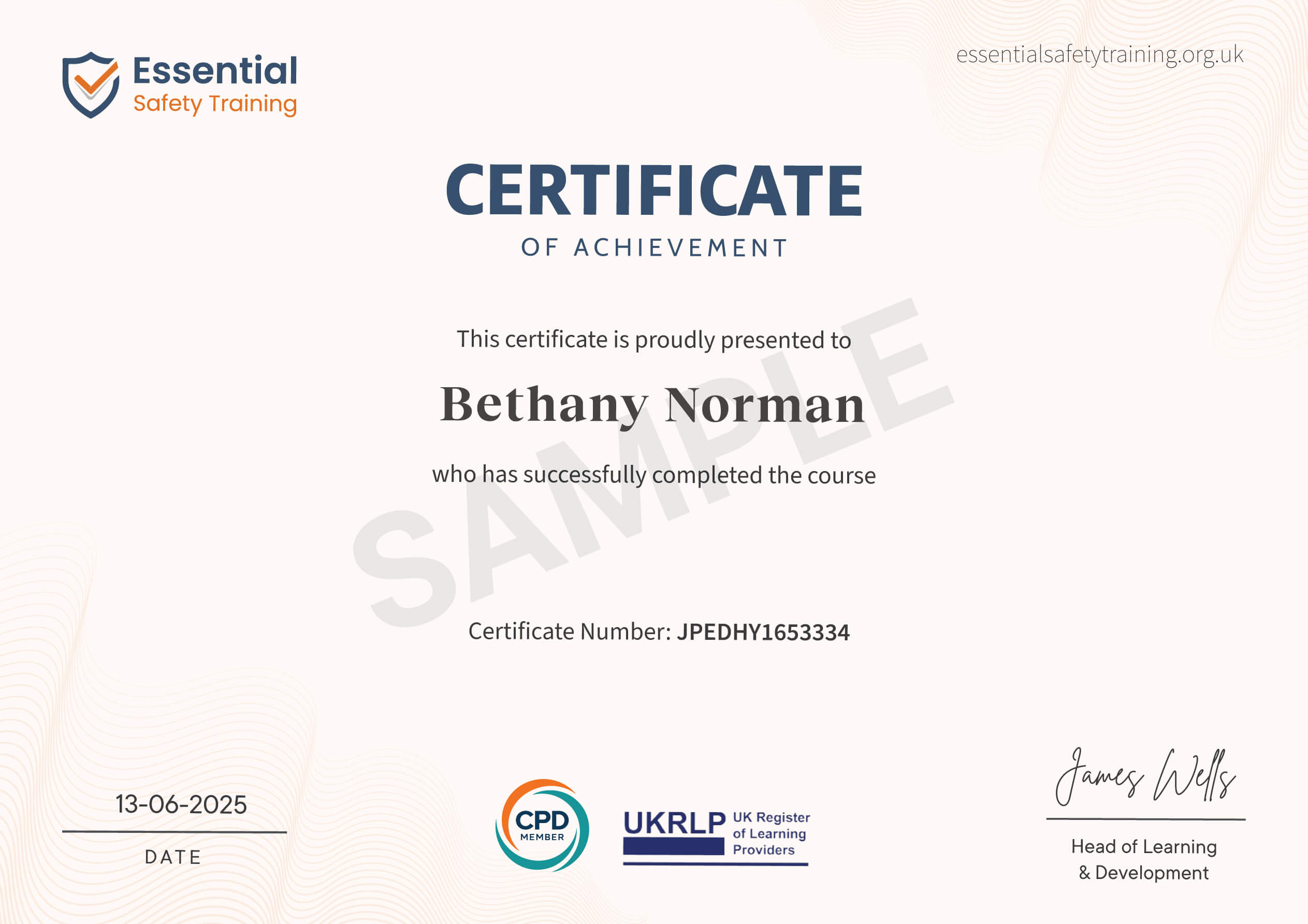
Download free Certificate upon completion
 Bulk discount for 10+ courses
 Access anytime, anywhere
 Free assessment retakes
 Full audio included
 11 CPD Points
 Shareable certificate
Poor asbestos decisions rarely come from missing paperwork; they come from evidence that has been skimmed, misread, or misapplied. Left unchecked, that gap turns into unsafe assumptions on site. That is why proper training matters, and our CPD-accredited asbestos survey training teaches you to read that evidence properly and act with confidence.
The asbestos survey training course is crafted for facilities managers, estates teams, health and safety officers, and maintenance staff working across pre-2000 UK premises. It is also suitable for contractors, project coordinators, compliance leads, and anyone wanting a firmer, more confident grasp of survey findings, sampling limits, and management-plan choices.
Through this asbestos sampling training, the learner will learn survey categories, sampling outcomes, and reporting conventions used on UK sites. They develop the knowledge to match survey scope, interpret lab findings, and recognise specialist needs. These skills help them plan maintenance, refurbishment, and demolition work more safely and confidently.
Furthermore, this online asbestos survey training covers core modules including legal responsibilities and competence limits, sampling and clearance interface awareness, survey scope choices, and register upkeep. Learners explore commissioning steps, laboratory evidence, and what contractor briefings need to include. Each module helps learners connect survey data to accountable site choices.
Whether you are seeking asbestos survey training courses for yourself or across a wider team, this programme delivers flexible study, structured learning, and recognised certification. Built by industry experts and aligned with UK requirements, it lets learners progress at their own speed from any device, at any time.
After successful completion, learners get a FREE digital certificate acknowledging their progress and supporting ongoing professional development. Get started today in this asbestos survey training course and help your people build the grounding to check evidence, question assumptions, and handle asbestos risk with more certainty on every site.

Facilities Managers
Estates Managers
Health and Safety Officers
Maintenance Team Leaders
Compliance Officers
Project Managers

Our courses are accredited and certified by the CPD Service, ensuring they meet recognised standards of Continuing Professional Development. CPD-certified training is respected by thousands of professional bodies and regulatory authorities across the UK and internationally. Completing a CPD-accredited course can strengthen your CV and make you a more competitive candidate in your chosen profession.

As a proud member of RoSPA (The Royal Society for the Prevention of Accidents), our training reflects a strong commitment to health and safety best practices. RoSPA is a trusted authority in accident prevention and workplace safety, making our affiliation a mark of quality and reliability for learners and employers alike.

We are an accredited member of the Academy of Occupational Health Training (AoHT), which means our training is aligned with national standards for occupational health and safety. This membership highlights our dedication to high-quality instruction, compliance, and learner wellbeing.

Our organisation is registered with the UK Register of Learning Providers (UKRLP), giving learners and partners assurance that we are a legitimate, verified training provider. Being UKRLP registered supports our credibility and commitment to transparent, regulated education across the UK.

This certificate does not have a formal expiry date, though renewal is recommended periodically in line with industry best practice.
625 Enrolled
11 Hours
Free & Instant CPD Certificate on CompletionFor Job Seekers, Freshers & ProfessionalsTrusted for Team Training & Businesses
697 Enrolled
14 Hours
Free & Instant CPD Certificate on CompletionFor Job Seekers, Freshers & ProfessionalsTrusted for Team Training & Businesses
475 Enrolled
12 Hours
Free & Instant CPD Certificate on CompletionFor Job Seekers, Freshers & ProfessionalsTrusted for Team Training & Businesses
528 Enrolled
7 Hours
Free & Instant CPD Certificate on CompletionFor Job Seekers, Freshers & ProfessionalsTrusted for Team Training & Businesses
14-Day Money-Back Guaranteee




While You're Here
Annual Pass • Limited time rate
Less than £1.20 a week - every course included


 Health & Safety