Food Hygiene


 Free & Instant CPD Certificate on Completion

 Fire Safety

No products in the basket.


The range of temperatures between 40 °F and 140 °F in food safety is known as the ‘Danger Zone for Food’. The FSA (Food Standards Agency) sets the danger zone between 8 °C and 63 °C. Food gets contaminated by rapid bacterial growth in this temperature range.
In the UK, around 1 in 4 people suffer from gastrointestinal infectious illness (GID) from contaminated food every year. It is estimated that there are 2.4 million cases of food poisoning annually, with an economic cost of £10.4bn.
This is why food safety has now become a collective responsibility, especially for food businesses across the UK. Team training on food safety can help ensure food safety and compliance at the same time.
Today, we are going to provide you with essential insights to learn about the temperature danger zone and more!
What is Food Safety?
Food safety is the process of preventing and reducing food risks and any other food-related hazards to ensure safe food handling, preparation, and storage. The primary aim is to ensure that food products do not adversely affect our health when consumed.
Food safety guides provide safe food temperature zones for chilling, cooking and storing food. It mostly focuses on the critical steps that need to be taken to prevent food from becoming contaminated with bacteria, viruses, allergens, chemical hazards or other foodborne pathogens.
The 5Cs of food safety include,
- Check: Always check use-by dates of foods and food packaging.
- Cross-contamination: Prevent cross-contamination between raw and ready-to-eat foods.
- Chill: Use the proper food storage guidelines for perishable foods.
- Cook: Cook food following the proper temperatures to destroy bacterial growth.
- Clean: Wash hands and all surfaces when handling food.
What is the Danger Zone for Food?
The danger zone for food in the UK is typically considered to be 8°C to 63°C (some references say 5°C to 63°C). In this temperature range, harmful bacteria can multiply quickly, doubling in numbers every 20 minutes, and lead to food poisoning.
One of the most crucial points of food safety and hygiene is proper temperature control. For anyone working in catering, food handling, food preparation, and/or any role in the UK food industry, this is essential.
In food safety, no food should remain in the danger zone for more than two hours. If they have been in the danger zone for more than two hours, they should be reheated to 75°C or thrown away (particularly for high-risk foods).
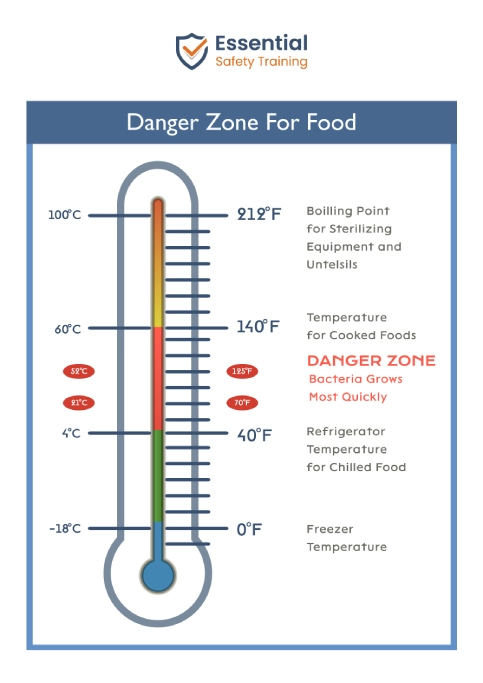
What happens if your food stays in the danger zone for more than two hours?
Your food gets contaminated.
Food contamination in food processing refers to the presence of bacteria, viruses, parasites, chemical agents, allergens, or any other harmful substances that make foods unsafe.
Foodborne illnesses are typically infectious or toxic and occur as a result of these food contaminants.
The temperature danger zone allows harmful bacteria to multiply quickly to unsafe levels in food. It affects the body in various ways, such as causing short-term foodborne problems like food poisoning, and long-term, chronic problems like cancer or organ failure.
Now, you may wonder what the safe food temperatures are for cooking, chilling, or storing food. Let’s take a look!
Food Safety Temperatures in the UK:
| Food Process | Temperature |
| Chilled food storage (Fridge) | 8°C or below (operate at 5°C) |
| Freezer storage | −18°C or below |
| Cooking | 70°C for 2 minutes (or equivalent) |
| Cooling cooked food | Cool within 90 minutes, then chill to 8°C or below |
| Hot holding | 63°C or above |
| Hot food out of hot holding | Below 63°C for a maximum of 2 hours (only once) |
| Reheating (England, Wales, NI) | Steaming hot (≈70°C for 2 min) |
| Reheating (Scotland) | 82°C minimum |
| Reheating high-risk foods | 75°C |
What is the HACCP Danger Zone?
HACCP in food safety is known as Hazard Analysis and Critical Control Point. It is a system of food safety management which monitors, evaluates and controls food hazards to minimise foodborne risks.
The HACCP Danger Zone for food is between 41°F and 135°F (5°C and 57°C). If the food is in the temperature danger zone in an industrial or commercial setting, the maximum time for the food should not be more than 2 hours.
The Food Safety Act 1990 states that it is illegal to sell or serve food that might be unfit for consumption. It directly relates to the way food is stored, cooked, cooled, reheated and then held for service in the usual way.
HACCP in Food Safety
The legal requirements for ensuring food safety are controlled by HACCP–related procedures.
In the HACCP system, food hazards are identified to take appropriate control measures. This includes controls for temperature checks like cooking, cooling and hot holding limits. It also helps food industry staff stay compliant with the UK Food Safety regulations.
With the right food safety training, anyone working in the food business can become competent to function efficiently in the real world, not just on paper.
Level 2 Food Safety and Hygiene for Business
Implement the best food hygiene & safety practices in your food business and ensure legal compliance.
Enrol Now
Under the UK food safety laws, the responsibility of a food business operator or someone working in the food industry includes:
- Accurate temperature records.
- Using probes and measuring tools that are calibrated.
- Using calibrated equipment.
- Cross contamination/cleaning controls.
- Chemical hazards prevention.
- Staff who are aware of the safe limits and safety guidelines.
- Practical skills to demonstrate how they take a core temperature rather than refer to a written procedure.
Other than that, food handlers must use a food thermometer, practice proper safety procedures and record the temperature.
Supervisors and managers, on the other hand, must ensure equipment operates, records are filled out, and employees are properly trained.
How to maintain the Temperature Danger Zone in Food Safety?
The amount of risk when food stays in the temperature danger zone also depends on the time. Food that is safe to start cooking in the kitchen may still end up being unsafe if the service is delayed.
Knowing about time and temperature control in food safety is essential. The UK food safety legislation requires food businesses to keep food safe at all times, and to do this, they should manage temperature effectively.
Bacteria can grow rapidly between 5°C and 63°C (40°F and 140°F), which is known as the Temperature Danger Zone. What can you do to avoid the danger zone?
Let’s go through a food safety guide to keep food and our health safe!
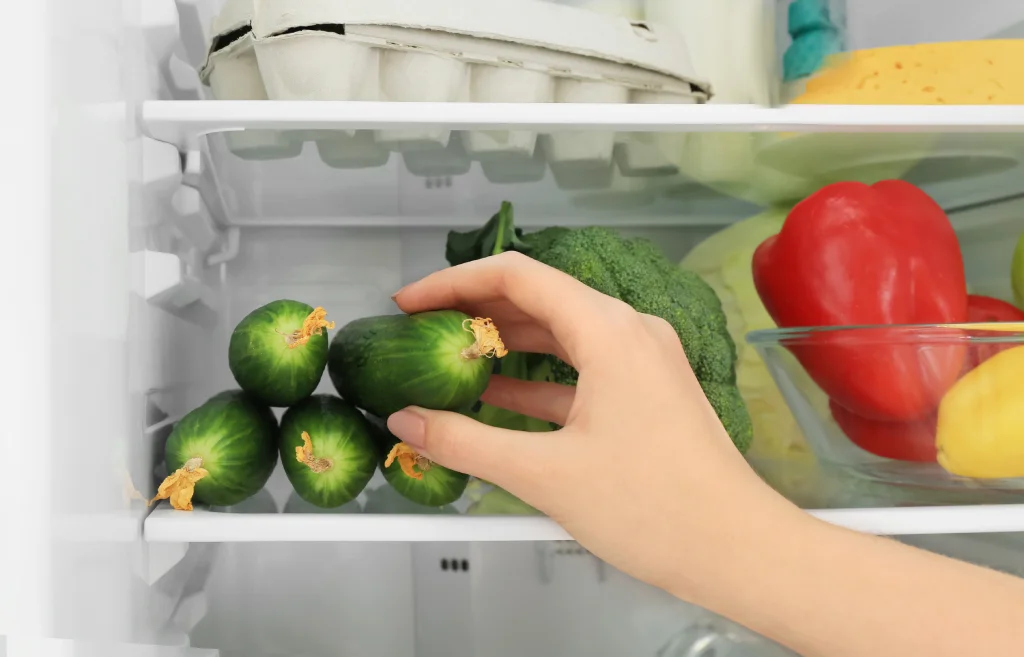
Managing Cold Storage
- Keep refrigerators at 1°C-5°C (but no higher than 5°C).
- Leave some space between different food items to allow cool air to flow freely.
- Use a clean probe or fridge thermometer to check fridge temperatures twice a day.
- Freezers are considered to be refrigerated at – 18°C or lower, and bacteria do not grow at these temperatures.
Hot Holding and Cooking management
- Cook food until it reaches a safe cooking temperature (75°C or above to the centre).
- Keep hot-held foods hot and ready to eat at 63°C and above by using a warming tray or oven.
- Hot holding (without temperature monitoring): If food temperature is below 63°C, discard if it has been held for more than 2 hours.
Cooling and Thawing Safely
- Cool cooked hot foods to 8°C or below in 90 minutes before putting them in the fridge.
- Divide large pots of food and make use of ice baths to quickly cool food.
- Don’t thaw foods on a kitchen counter. Thaw frozen food in the refrigerator, under cold running water or in a microwave oven.
Reheating
- Reduce the amount of time perishable foods are in the danger zone.
- Reheat food: It can be reheated if it has been less than 2 hours. Return to hot holding or chill again for up to 2 hours.
- After 2-4 hours: food should be consumed immediately and cannot be returned to temperature control. It turns to waste if it exceeds 4 hours.
- These limits are in effect regardless of whether the food is on a counter, trolley or waiting to be served.
You can also follow the FSA Food Safety guide to help you ensure food hygiene and safety in your home and food businesses.
Level 1 Food Hygiene and Safety
Build a strong foundation in food hygiene and meet the UK food safety standards with our online course.
Enrol Now
Frequently Asked Questions (FAQs)
What is the 4-hour rule for the danger zone?
Most ready-to-eat foods can remain in the food temperature danger zone for up to 4 hours. Once the 4-hour time is up, the food gets spoiled and should be discarded.
What is the 2-hour rule for food safety?
The two-hour rule is a guideline that perishable foods should not sit at room temperature for longer than two hours. Bacteria grow rapidly in the temperature danger zone (between 8 °C and 63 °C) and can spoil perishable foods quickly.
Is it safe to eat food left out for 4 hours?
No, it’s not safe to eat food that was left at room temperature for 4 hours. The FSA recommendation is to throw away perishable food after 2 hours if the temperature of the room or outdoors is 90°F or hotter.
What three vegetables should never be refrigerated?
The three vegetables that should not be refrigerated are potato, onion and garlic. Another one that is often included among this list is basil. They spoil or mould rapidly, lose their texture and change their chemical makeup at low temperatures.
Conclusion
Food safety has introduced a temperature range between 8 °C and 63 °C that is known as the danger zone for food. When food stays in the danger zone for a long time (more than 4 hours or 2 hours for perishable food), it gets contaminated.
Spoiled/contaminated food causes many food-borne illnesses. Every year, in the UK, millions of people suffer from food-related illnesses and grow despair in the process. For this, food safety management has become a necessity now more than ever.
With the help of online food safety training, you can now get your team adequately trained and skilled and ensure food safety and hygiene in your food businesses.
Follow our helpful guide on 5 safety rules in the kitchen and get food safety tips and essentials!
Essential Safety Training

At Essential Safety Training, we deliver a blend of online courses on safety and compliance. As a top-notch award-winning platform in the UK, we value learners and keep our commitment by creating more accessible, expertly crafted courses.