Food Hygiene


 Free & Instant CPD Certificate on Completion

 Fire Safety

No products in the basket.


A customer says they cannot eat milk. Is it an allergy or an intolerance? Getting that answer wrong could cause serious harm. Anyone handling food needs to understand the difference.
If you are asking, what is the difference between an allergy and an intolerance to food? The answer is simple. An allergy involves the immune system. An intolerance usually affects digestion.
This guide explains symptoms, triggers, anaphylaxis and UK allergen safety rules. You will also learn how food businesses can manage these risks safely. Let’s start with the key definitions!

What is a Food Allergy?
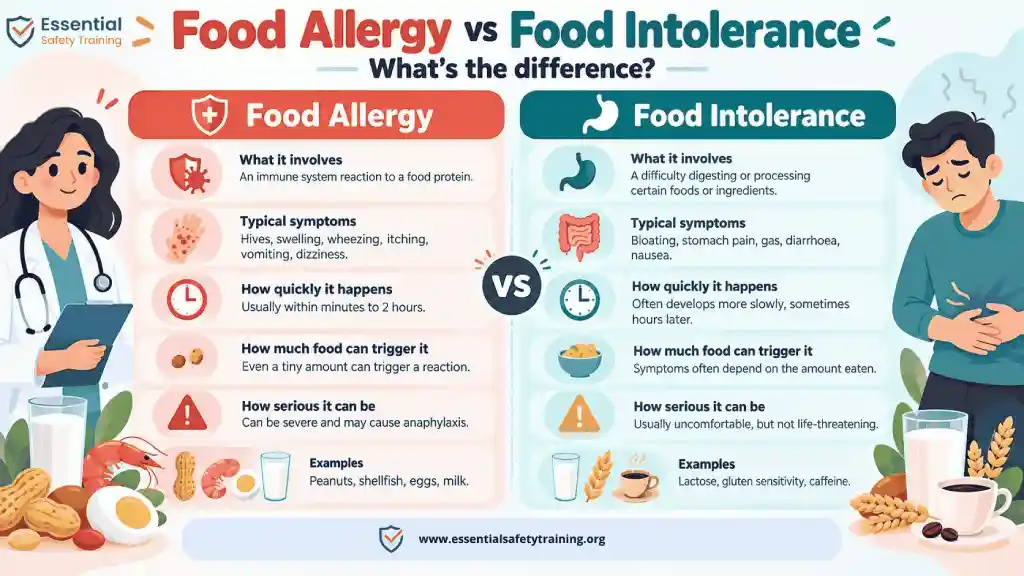
A food allergy happens when your immune system mistakes a food protein for danger. In an IgE-mediated food allergy, IgE antibodies can trigger the release of histamine. This creates an allergic reaction, often soon after eating.
Food allergy symptoms can include:
- Itchy skin, hives or flushing
- Swelling around the lips, face or throat
- Wheezing or breathing difficulties
- Vomiting, diarrhoea or stomach pain
- Dizziness, collapse or loss of consciousness
Common trigger foods include peanuts, tree nuts, milk, eggs, fish, shellfish, soya, wheat and sesame. A peanut allergy, for example, may react to a tiny trace.
What is a Food Intolerance?
A food intolerance usually means your body struggles to digest or process something. It does not usually involve the same immune response as an allergy. Symptoms often develop several hours after eating.
Food intolerance symptoms may include:
- Bloating,
- Diarrhoea,
- Cramps,
- Nausea,
- Headaches or
- Tiredness.
The amount you eat can affect the severity of your symptoms. Common examples include lactose intolerance, food sensitivity to FODMAPs, caffeine or food additives. Some people also report histamine intolerance or non-coeliac gluten sensitivity.
Lactose intolerance occurs when your body produces too little lactase. This enzyme helps digest lactose, the sugar found in milk and dairy foods. Coeliac disease is different because it is an autoimmune condition.
Common Food Allergies and Intolerances
UK food information rules recognise 14 regulated allergens. Businesses must identify these allergens when they are present in food. The table containing 14 regulated allergens will help you to remember them easily.
| Regulated allergen | Common examples |
| Celery | Stalks, leaves, seeds and root |
| Cereals containing gluten | Wheat, rye, barley and oats |
| Crustaceans | Prawns, crab and lobster |
| Eggs | Baked goods and sauces |
| Fish | Cod and salmon |
| Lupin | Bread, pastries and pasta |
| Milk | Milk and dairy products |
| Molluscs | Mussels, oysters and squid |
| Mustard | Dressings and marinades |
| Peanuts | Baked goods and sauces |
| Sesame | Hummus and bread |
| Soya | Tofu and soy sauce |
| Sulphur dioxide/sulphites | Dried fruit, beer and wine |
| Tree nuts | Almonds, walnuts and cashews |
Food intolerances are different. Lactose, FODMAPs, caffeine and some food chemicals may cause delayed gut symptoms. FODMAPs can worsen symptoms for some people with irritable bowel syndrome.
Level 2 HACCP Training
Earn your entry-to-immediate level food safety qualification & compliance
Enrol Now
What is the Difference Between an Allergy and an Intolerance to Food?
The main difference is how your body responds. An allergy involves the immune system and can cause anaphylaxis. An intolerance usually causes digestive discomfort without that same life-threatening reaction. A comparison table may help you understand better.
A comparison table on Allergy and Intolerance to Food:
| Feature | Food allergy | Food intolerance |
| Body system | Immune system | Usually digestive system |
| Timing | Often minutes, sometimes longer | Often several hours |
| Amount needed | Tiny traces may cause symptoms | Small amounts may be tolerated |
| Symptoms | Hives, swelling, wheezing or vomiting | Bloating, wind, cramps or diarrhoea |
| Main risk | Anaphylaxis | Usually discomfort |
| Assessment | Allergy test or specialist assessment | Clinical assessment and food diary |
There is no single reliable food intolerance test for every condition. Avoid self-diagnosing severe reactions. A GP(General Practitioner) may arrange allergy testing or refer you to clinical immunology.
What is Anaphylaxis and Why is it a Food Safety Emergency?
What is Anaphylaxis? Anaphylaxis is a severe, rapid allergic reaction. Signs may include throat swelling, wheezing, breathing difficulty, dizziness, collapse, hives or vomiting.
If you suspect anaphylaxis:
1. Call 999 immediately.
2. Use the person’s adrenaline auto-injector, if available.
3. Keep them lying down unless breathing is difficult.
4. Help them sit with their legs outstretched if necessary.
5. Follow the emergency operator’s instructions.
Do not ask the person to stand or walk. A second auto-injector may be needed if symptoms do not improve, following emergency guidance.

Why is Allergen Awareness Important in Food Businesses?
Accurate allergen information protects customers from serious adverse reactions. Even small amounts can transfer through shared utensils, hands, surfaces, cooking oil or equipment.
UK food businesses must follow applicable food allergen labelling requirements. In England, Wales and Northern Ireland, the Food Information Regulations 2014 apply. Scotland has corresponding Scottish regulations.
Natasha’s Law applies to food prepacked for direct sale. It requires a full ingredients list, with the 14 regulated allergens emphasised. The Food Standards Agency provides current guidance for businesses.
How Can Food Businesses Manage Allergies and Intolerances? A Step-by-step Guide
Food Allergen Awareness Training
Get certified in Food Allergen Awareness Training and food safety compliance
Enrol Now
Good allergen control links ingredient records, staff training and safe communication. Follow these steps to build a reliable system in your kitchen.
Step 1: Create a Written Allergen Procedure
Write down staff responsibilities, recipe changes and how you handle customer requests. This gives your team one clear reference point, rather than relying on memory or guesswork during busy service.
A written HACCP (Hazard Analysis and Critical Control Point) plan can also support structured food safety procedures and hazard management. Monitor and review these controls to ensure they remain effective. HACCP verification procedures can support this ongoing process.
- Assign who updates the procedure when recipes change
- Note how allergy questions should be escalated
- Keep a copy accessible in the kitchen and front-of-house area
Step 2: Keep Accurate Ingredient Records
Check supplier information, ingredients and food labels regularly. Ingredients change more often than people expect, so your records need to keep pace with every delivery.
- Compare each delivery against your current product specification
- Update your ingredient file whenever a supplier changes
- Store allergenic ingredients separately, clearly labelled
Step 3: Prevent Cross-Contact During Preparation
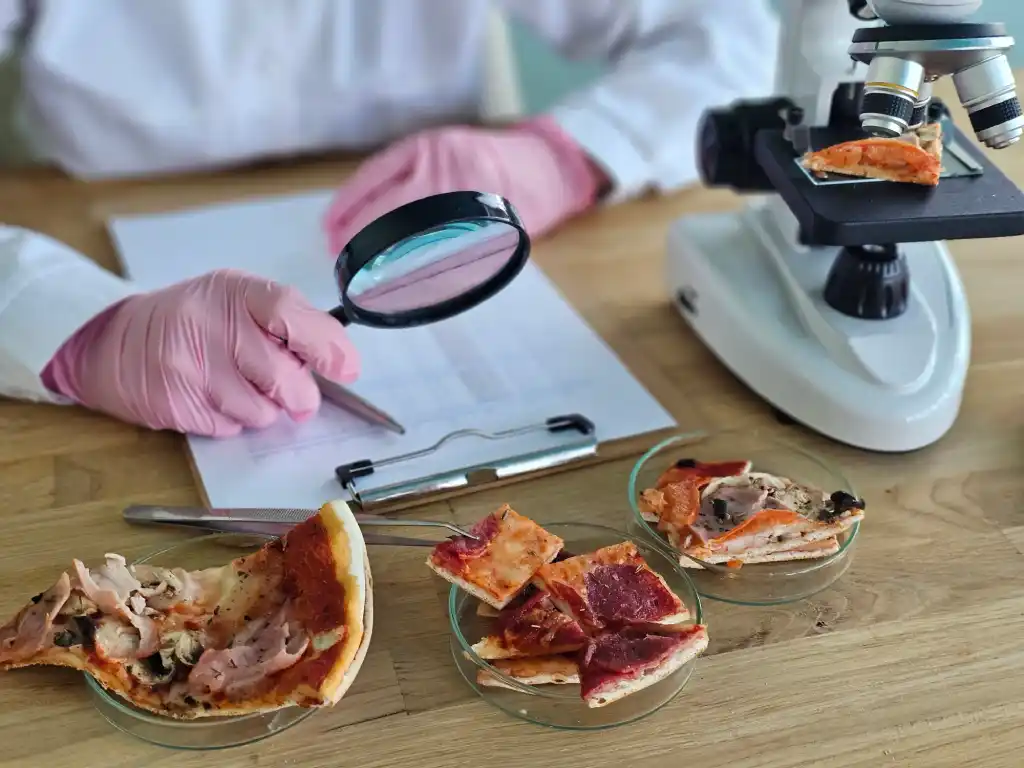
Clean surfaces and equipment thoroughly between tasks. Use separate equipment where appropriate, especially for high-risk allergens like nuts, gluten or shellfish. Following a suitable food hygiene cleaning schedule can help support consistent cleaning practices.
You should also understand how to prepare foods for allergic consumers to reduce the risk of allergen cross-contact during preparation.
- Wash hands, utensils and chopping boards between different orders
- Use separate oil or cooking space for allergen-free meals
- Avoid shared trays, tongs or serving spoons across dishes
Step 4: Manage “May Contain” Statements Carefully
Use precautionary allergen labelling only after a proper risk assessment, not as a blanket safety net. Overusing these warnings can confuse customers and reduce trust in your menu information.
- Review supplier “may contain” statements before adding your own
- Base decisions on actual cross-contact risk, not convenience
- Update labelling whenever your process or suppliers change
Step 5: Communicate Clearly With Customers and Staff
Never guess when answering an allergy question. If information is uncertain, ask a manager or chef before confirming anything to the customer.
Providing appropriate staff training can help employees understand allergen information, customer communication and safe food practices.
- Display clear signage encouraging customers to flag allergies
- Record allergy requests on tickets or your POS system
- Confirm ingredients verbally if written information is incomplete
Food Labelling Regulations Training Course
Gain essential knowledge on food labelling regulations in the UK
Enrol Now
Step 6: Check Every Order Before It Leaves the Kitchen
Make sure allergy requests reach the kitchen and are confirmed before serving. A final check reduces the risk of mistakes reaching the table.
- Appoint a shift lead to verify allergy orders
- Match the ticket against the final plate before service
- Report any near-misses so procedures can improve
Colour-coded equipment can support these controls, but it is not a substitute for proper cleaning, separation and supervision throughout service.
What Food Allergy and Allergen Training Do Employees Need?
Food businesses must provide suitable supervision, instruction and training for employees’ duties. There is no blanket rule requiring every worker to hold one specific allergen certificate.
Training should cover:
- The 14 regulated allergens
- Food labels and ingredient changes
- Cross-contamination prevention
- Safe customer communication
- Allergy procedures and emergency actions

Front-of-house staff, chefs, supervisors, agency workers and temporary employees all need suitable information. Nobody should guess whether a dish contains an allergen. Businesses should also consider their wider mandatory training requirements alongside role-specific food safety and allergen training.
Is lactose intolerance the same as a milk allergy?
No. Lactose intolerance involves difficulty digesting lactose. A milk allergy involves an immune reaction to milk proteins. The symptoms and controls can therefore differ.
Can a food intolerance become an allergy?
An intolerance does not normally turn into an allergy. However, you can have both conditions. Seek medical advice if your symptoms change or become severe.
Is coeliac disease the same as gluten intolerance?
No. Coeliac disease is an autoimmune condition triggered by gluten. Non-coeliac gluten sensitivity does not involve the same confirmed autoimmune process.
When should I seek medical advice?
Speak to your GP about repeated food reactions, severe symptoms or unexplained weight loss. Call 999 immediately if someone has breathing difficulty, throat swelling or collapse.
Conclusion
Now again, what is the difference between an allergy and an intolerance to food? A food allergy involves the immune system and can cause anaphylaxis. A food intolerance usually affects digestion and causes delayed discomfort. Treating food allergy and food intolerance as identical could create serious risks.
For food businesses, accurate records, clear communication and effective training support safer service. They also help meet UK food information requirements and reduce cross-contact risks.
Review your allergen procedure and staff knowledge regularly. Make sure everyone knows when to ask questions, what information to check and how to respond during an emergency.
Essential Safety Training

At Essential Safety Training, we deliver a blend of online courses on safety and compliance. As a top-notch award-winning platform in the UK, we value learners and keep our commitment by creating more accessible, expertly crafted courses.